Jinko Solar Panels Price in Pakistan (2026): Per-Watt Rates
- Home
- Post
Jinko Solar Panels Price in Pakistan (2026): Per-Watt Rates
- Miss Tahira
- Writer
- Oct 21, 2026

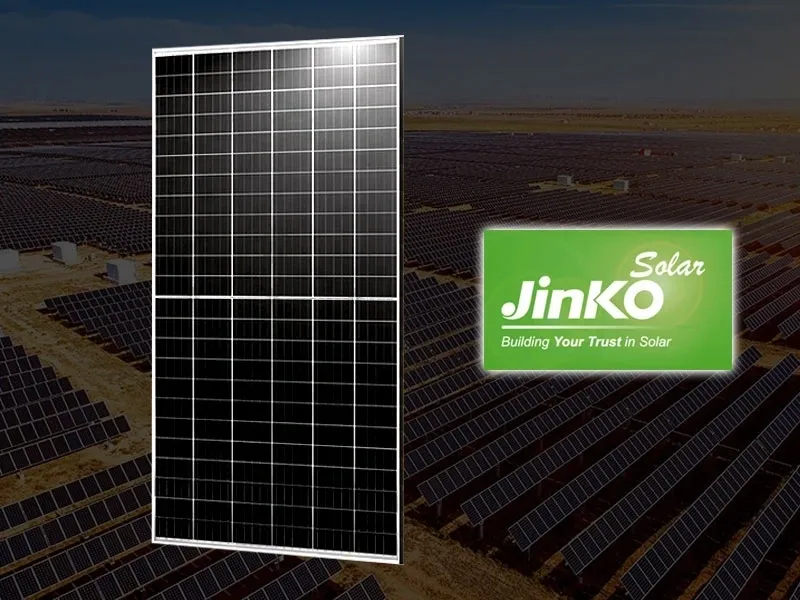
Jinko solar panels price in Pakistan varies by wattage, model, panel type, grade and seller. In October 2026, dealer lists put many N-type Tiger Neo panels at around Rs 40–45 per watt. At that rate, a 585W panel costs roughly Rs 23,400–26,300 before any extra charges. These are market estimates, not a quote from ZN Solar Energy; prices and stock can change quickly.
This guide explains Jinko prices by wattage, model specifications, N-type and P-type differences, warranty checks and how to budget for installation. For a wider brand and wattage comparison, read our solar panel price in Pakistan guide.
Jinko Solar Panels Price in Pakistan at a Glance
Panel or item | Indicative price |
Jinko Tiger Neo N-type | Rs 40–45 per watt |
550W panel | Rs 22,000–24,800 |
580W panel | Rs 23,200–26,100 |
585W panel | Rs 23,400–26,300 |
610W panel | Rs 24,400–27,500 |
720W panel | Rs 28,800–32,400 |
Nine 585W panels (about 5.3kW) | Rs 2.11–2.37 lakh |
These ranges are calculated from a per-watt rate and should not be treated as guaranteed retail prices. Ask whether the quote includes taxes, delivery and handling, and whether the panel is N-type or older P-type stock. If a price is much lower than other offers, check the grade, serial numbers, model code and warranty documents before paying.
How Jinko Panel Prices Are Calculated
The simple formula is panel wattage × price per watt. For example, a 585W panel at Rs 40 per watt costs Rs 23,400; at Rs 45 per watt, it costs Rs 26,325.
The main factors affecting the Jinko solar panels price in Pakistan are:
- Exchange rate and market supply: Imported-panel prices can change with currency movements and global module prices.
- Model and technology: N-type, P-type, monofacial and bifacial modules may have different prices even when their wattage is similar.
- Grade and documentation: A-grade panels with traceable model and serial details may cost more than undocumented or B-grade stock.
- Tax and delivery: Confirm whether tax, transport and unloading are included. Tax rules can change, so verify the current treatment with the supplier or relevant authority.
- Warranty support: A low price is less attractive if the seller cannot explain how a warranty claim would be handled in Pakistan.
Jinko Solar Panel Price by Wattage
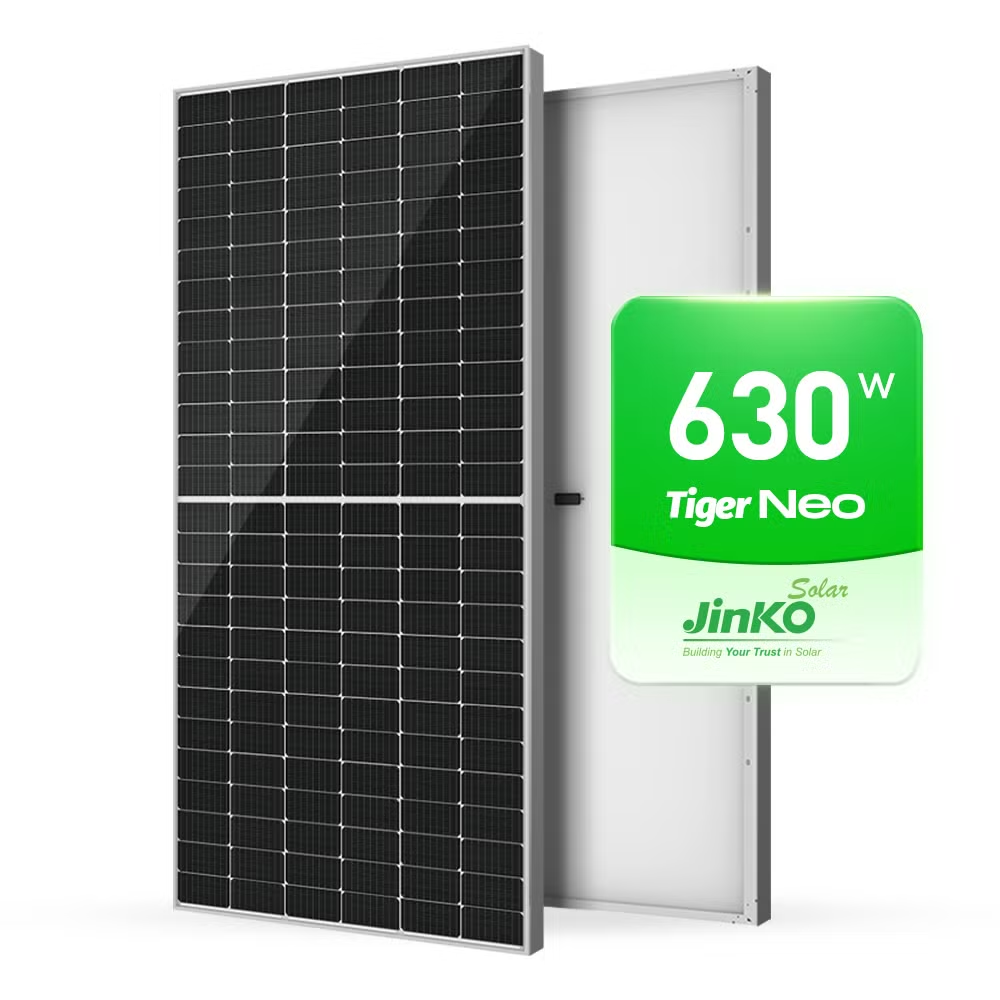
The following estimates use Rs 40–45 per watt and are rounded for easy comparison.
Wattage | Estimated panel price |
550W | Rs 22,000–24,800 |
580W | Rs 23,200–26,100 |
585W | Rs 23,400–26,300 |
590W | Rs 23,600–26,600 |
600W | Rs 24,000–27,000 |
610W | Rs 24,400–27,500 |
620W | Rs 24,800–27,900 |
640W | Rs 25,600–28,800 |
700W | Rs 28,000–31,500 |
720W | Rs 28,800–32,400 |
Jinko solar panel 550 watt price in Pakistan today
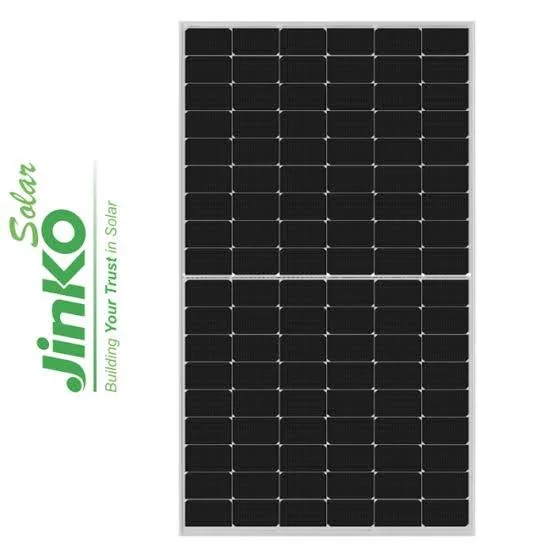
The estimated Jinko solar panel 550 watt price in Pakistan today is Rs 22,000–24,800 at Rs 40–45 per watt. Older P-type 550W stock may be listed at a lower rate. Check the manufacturing date, panel type and documentation before comparing it with a newer N-type module.
Jinko solar panel 580 watt price in Pakistan
The Jinko solar panel 580 watt price in Pakistan is approximately Rs 23,200–26,100 using the indicative rate above. Nine 580W panels provide about 5.22kW of DC capacity; ten provide 5.8kW. The inverter and roof layout still need to be designed for the actual system.
Jinko solar panel 585 watt price in Pakistan today 2026
The Jinko solar panel 585 watt price in Pakistan today is estimated at Rs 23,400–26,300. Searchers may also use phrases such as jinko solar panel price in pakistan today and jinko solar panel price in pakistan 585 watt. Make sure the quote identifies the exact 585W model: a monofacial version and a bifacial dual-glass version are not identical.
Older and smaller Jinko panels: 350W, 330W, 300W, 275W and 150W
People still search for the jinko 350 watt solar panel price in pakistan, jinko 330w solar panels price in pakistan, jinko solar panels prices in pakistan 300 watt, and jinko solar panel 150w price in pakistan. Current availability and verified prices for these older sizes may be limited. One list has placed a 150W panel around Rs 7,000–9,000 and a 330W panel around Rs 14,000–16,000, but these figures need confirmation from a seller. Older codes such as JKM275PP-60 may refer to leftover or used stock, so inspect condition and remaining warranty carefully.
Why Jinko Solar Panels Are Popular in Pakistan
Jinko is an established international solar-module brand, and its product range includes high-wattage modules for residential, commercial and industrial projects. Higher-wattage panels can reduce the number of modules required for a target capacity, although panel dimensions, roof space, wind loading and handling must also be considered.
The best choice depends on the exact model and your roof, not the brand name alone. Compare the datasheet, temperature coefficient, product warranty, power warranty and the seller’s after-sales process. A panel with attractive specifications may not be the right fit if its dimensions do not suit your roof or the warranty route is unclear.
Factors That Influence Jinko Solar Panels Price in Pakistan
The most important price factors are wattage, cell technology, monofacial or bifacial construction, grade, stock age, exchange rates, tax and seller support. A bifacial panel can generate additional energy from light reaching its rear side, but the benefit depends on installation height and the reflectivity of the surface below it. On a dark roof with little rear-side light, the gain may be limited.
For a fair comparison, request written quotes for the same full model code and wattage. Ask each supplier to state the per-watt rate, total price, taxes, delivery, warranty terms and quote validity. Do not compare a documented N-type panel directly with a discounted, older or undocumented product without accounting for those differences.
Benefits of Choosing Jinko Solar Panels
Potential benefits include a broad range of module sizes, high-wattage options and published technical datasheets for comparing performance. Some N-type models also have a relatively low temperature coefficient, which helps limit output loss as cell temperature rises. Actual production still depends on sunlight, shading, dust, orientation, inverter design and installation quality.
No panel eliminates heat-related losses. Proper system design, safe mounting, suitable ventilation and periodic cleaning are important in Pakistan’s climate. Ask the installer to estimate expected production using your roof conditions rather than promising a fixed saving.
Jinko N-Type vs P-Type – Which Should You Buy in Pakistan?
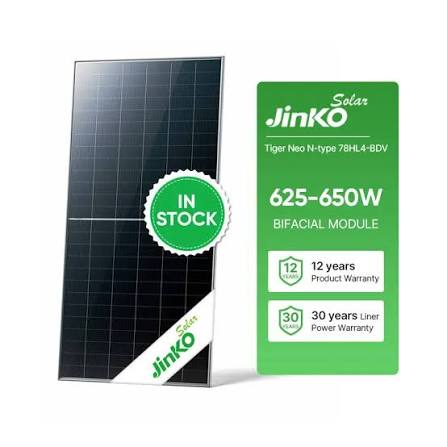
N-type Tiger Neo modules are newer products and may offer improved efficiency and temperature performance compared with older P-type mono PERC panels. P-type panels can still appear in the market at lower prices, particularly as leftover stock. However, a lower upfront price should be weighed against age, remaining warranty, efficiency and traceability.
For a new system, compare the complete datasheets and written prices before choosing. Confirm that the product is new, the model code matches the carton and invoice, and the serial number can be verified. Do not assume every panel labelled “585W Jinko” has the same construction or warranty.
Jinko Tiger Neo specifications and warranty
The table summarises the datasheet for the JKM585N-72HL4-V, one of the most quoted Jinko models. Datasheets change, so confirm the figures for your exact model at jinkosolar.com before you publish or buy.
Specification | JKM585N-72HL4-V |
Cell type | N-type monocrystalline (Tiger Neo) |
Rated power | 585W, positive tolerance of 0 to +3% |
Module efficiency | 22.65% |
Size and weight | 2,278 x 1,134 x 35 mm, about 28 kg |
Temperature coefficient of power | -0.29% per degree Celsius |
Product warranty | 12 years |
Linear power warranty | 30 years, 0.40% annual degradation, 87.4% of rated power guaranteed at year 30 |
Mechanical load rating | 2,400 Pa (wind), 5,400 Pa (snow) |
Jinko Solar Warranty & After-Sales Support in Pakistan
The product warranty generally relates to manufacturing defects, while the linear power warranty covers a stated level of output over time. These are different promises, and terms vary by model and seller. Ask who handles warranty claims in Pakistan, what documents are required, and whether the seller will assist if a claim is needed.
Keep the original invoice, model code, serial numbers and warranty paperwork. Verify the serial number through Jinko’s official channels before payment, and confirm the current warranty policy directly with the manufacturer or authorised supplier. Never assume that a warranty is valid locally simply because a product carries the brand name.
How to Check Jinko Panels Are Genuine
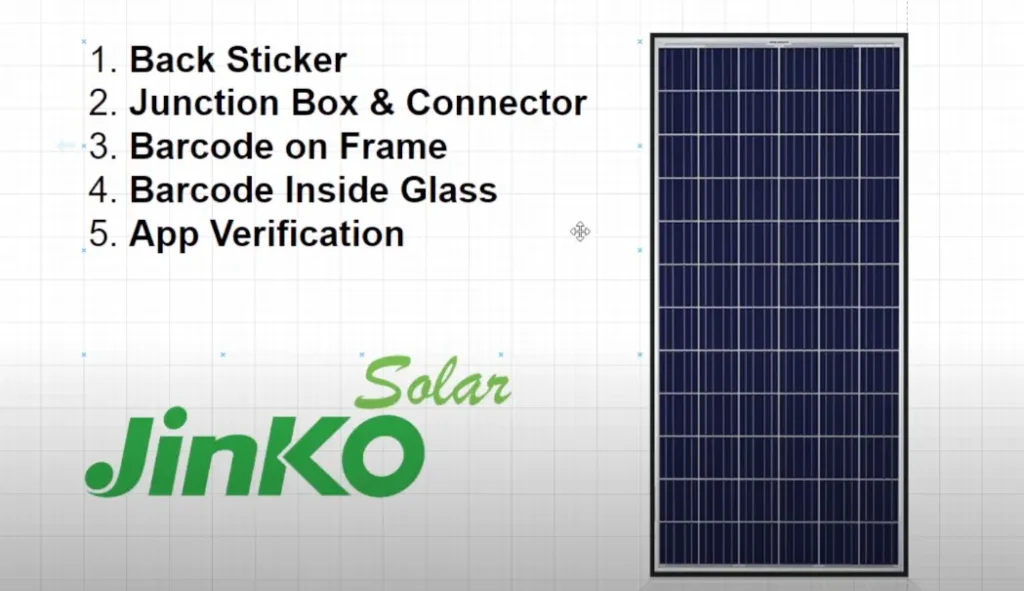
- Match the model code: Compare the panel label and carton with the written quote and datasheet.
- Verify serial numbers: Use Jinko’s official verification or warranty channel and confirm the current process before purchase.
- Get an itemised invoice: Include model, wattage, quantity, serial numbers and seller details.
- Inspect delivery: Check for cracked glass, chipped corners, bent frames or mismatched labels before installation.
- Ask about grade and warranty: Be cautious if a seller refuses documentation or offers a price far below comparable quotes.
If the seller will not provide model details or allow reasonable verification, consider another supplier.
Jinko vs LONGi vs Canadian Solar: how to choose
Jinko, LONGi and Canadian Solar are all widely sold, established brands, and dealer lists usually price them within a few rupees per watt of each other. That makes price a poor tiebreaker. Compare the exact model, the datasheet, the warranty terms, how easily you can get the stock, and who supports claims in Pakistan. No brand is best for every roof. For a wider comparison, see our guide to the solar panel price in Pakistan
From Jinko panel price to complete system cost
Panels are one part of the bill. A complete system adds the inverter, mounting structure, DC and AC cables, breakers, surge protection, earthing, installation labour and grid paperwork.
Here is what the panels alone cost at Rs 40 to 45 per watt:
System size | Panels | Actual capacity | Panels only (Rs) |
About 3 kW | 5-6 x 585W | 2.9-3.5 kW | 1.17-1.58 lakh |
About 5 kW | 9 x 585W | 5.3 kW | 2.11-2.37 lakh |
About 5 kW (larger panels) | 7 x 720W | 5.0 kW | 2.02-2.27 lakh |
About 8 kW | 14 x 585W | 8.2 kW | 3.28-3.69 lakh |
About 10 kW | 17-18 x 585W | 9.9-10.5 kW | 3.98-4.74 lakh |
1 lakh = 100,000. Figures are arithmetic from the per-watt range, not quotes.
Complete installed costs vary widely with specification. Third-party guides give roughly Rs 7 to 12 lakh for a 5 kW on-grid system and Rs 9 to 17 lakh for a 5 kW hybrid with lithium batteries, depending on battery size. These are estimates from other companies, not ZN prices.
Net billing affects how big to go. NEPRA’s Prosumer Regulations 2026, notified on 9 February 2026, replaced net metering with net billing. Exported units now earn a lower rate than the units you avoid buying, and reports on the new rate and approval fees differ and have changed since. So size mainly for your daytime use, and confirm the current rate and process with NEPRA or K-Electric. Our net metering and prosumer service can help with the paperwork, and our solar calculator gives a first estimate of system size.
How to Compare Jinko Quotes
Before buying, check that each quote includes the exact model code, panel type, per-watt rate, tax status, delivery, warranty route, serial-number verification and quote expiry date. For a full installation quote, also compare inverter specifications, structure, cables, protection devices, earthing, labour and after-sales support. A low panel price does not necessarily mean a lower total system cost.
Where to Get This Installed
ZN Solar Energy provides solar consultation, system design, installation and maintenance services. If you are planning a Jinko-based system, arrange a site assessment so the installer can review roof space, shade, electrical loads, mounting and inverter compatibility before recommending the panel count.
Explore our local service pages:
Excellence in Solar Installation
Let our experienced solar experts help you reduce electricity costs and enjoy efficient, dependable solar power. Contact us today for a free consultation and take the first step toward a brighter, energy-efficient future.
+92 321 9210180
Related Posts
Frequently asked questions
What is the Jinko solar panels price in Pakistan?
In October 2026, dealer lists show about Rs 40 to 45 per watt for Jinko Tiger Neo N-type panels. That is about Rs 23,400 to 26,300 for a 585W panel. Rates change often, so ask for a dated quote.
What is the Jinko solar panel price in Pakistan today?
Use the per-watt range of Rs 40 to 45 and multiply by the panel’s wattage, then confirm with a dealer. One October 2026 list shows Rs 40.65 to 43.75 per watt.
What is the Jinko solar panel 585 watt price in Pakistan today (2026)?
About Rs 23,400 to 26,300. At Rs 40 per watt it is Rs 23,400.
What is the Jinko solar panel 580 watt price in Pakistan?
About Rs 23,200 to 26,100 at Rs 40 to 45 per watt. Some lists showed Rs 21,500 to 23,500 earlier in the year.
What is the Jinko solar panel 550 watt price in Pakistan today?
About Rs 22,000 to 24,800 at current N-type rates. Older 550W stock is sometimes listed lower, so check the panel type.
What does the Jinko solar panel 150W cost in Pakistan?
One list shows about Rs 7,000 to 9,000, around Rs 50 per watt. Small panels cost more per watt than large ones.
What is the difference between Jinko monofacial (V) and bifacial (BDV) panels? Monofacial panels collect light on the front only. Bifacial dual-glass panels also collect light on the back, and Jinko states that output can rise by roughly 5% to 25% depending on conditions. Check the model code, because the price and roof suitability differ.
How long is the Jinko panel warranty?
The Tiger Neo JKM585N-72HL4-V datasheet lists a 12-year product warranty and a 30-year linear power warranty, with 87.4% of rated power guaranteed at year 30. Terms vary by model, so read the datasheet for your exact code.
Is the Jinko warranty valid in Pakistan?
It depends on the route through which the panels were sold. Ask your seller which company handles claims in Pakistan, keep the invoice and serial numbers, and verify the serial number before you pay.
How do I check that a Jinko panel is genuine?
Match the model code and label to the datasheet, verify the serial number on Jinko’s official warranty check, and get the model, wattage and serial numbers on the invoice.
How many Jinko panels do I need for 5 kW? Nine 585W panels give about 5.3 kW. Seven 720W panels give about 5.0 kW.
Is Jinko better than LONGi or Canadian Solar?
All three are widely sold brands with similar pricing in dealer lists. Compare the exact model, warranty terms and support in Pakistan rather than the brand name alone.
Does net metering still apply to Jinko solar systems?
Not for new consumers. NEPRA moved Pakistan to net billing in February 2026, and existing contracts continue until expiry. Confirm the current rate and process with NEPRA or K-Electric.
Where can I get Jinko solar panels installed in Karachi?
ZN Solar Energy provides panel installation, structure design, maintenance and net billing support. See our solar company in Karachi page.
Conclusion
The Jinko solar panels price in Pakistan comes down to three things: the per-watt rate, the exact model code and whether the panel is genuine and documented. Check which Jinko panel you are quoted, confirm the tax treatment and the warranty route, and look at the complete system, not just the panel. If you would like a figure for your own roof, ask ZN for a free consultation.
Share:
Recent Posts
Photo Gallery